Research and development · 2019
RobinHUD
Indoor navigation in augmented reality: spatial anchors in the cloud and a prototype Android app built in Unity, to guide a person through a building where GPS can't reach.
Official title: «Planned research aimed at acquiring new technologies to be used to improve the indoor navigation process through the use of augmented reality».
Goal
RobinHUD is an indoor navigation system based on augmented reality. Indoors, GPS doesn’t work: the project explored the use of Azure Spatial Anchors, Microsoft’s spatial anchor service, to find your way through buildings using only the device’s camera and an Internet connection. The guiding example is a department store: spatial anchors lead the user to the right area or aisle, while close-range recognition via QR codes, with the Vuforia engine, identifies the single product on the shelf or brings up an information panel on a machine. Activities ran from 8 January to 19 December 2019.
What was done
The project was organised in three phases: the creation of two applications — one for authoring, to build the navigation environment, and one for the end user —, the addition of precise product information via QR codes, and the prospect of carrying the solution to iOS and HoloLens 2 as well. Android and Unity were chosen for prototype development, with scripts in C#; anchor persistence is entrusted to a Cosmos DB database on Azure, reached through a WebApp exposing authenticated REST APIs. The study started from the official examples of the Microsoft SDK, then in beta and nearly undocumented, and went on to build an application of its own, with a dedicated class architecture for handling sessions, detected planes and interaction.
What came of it
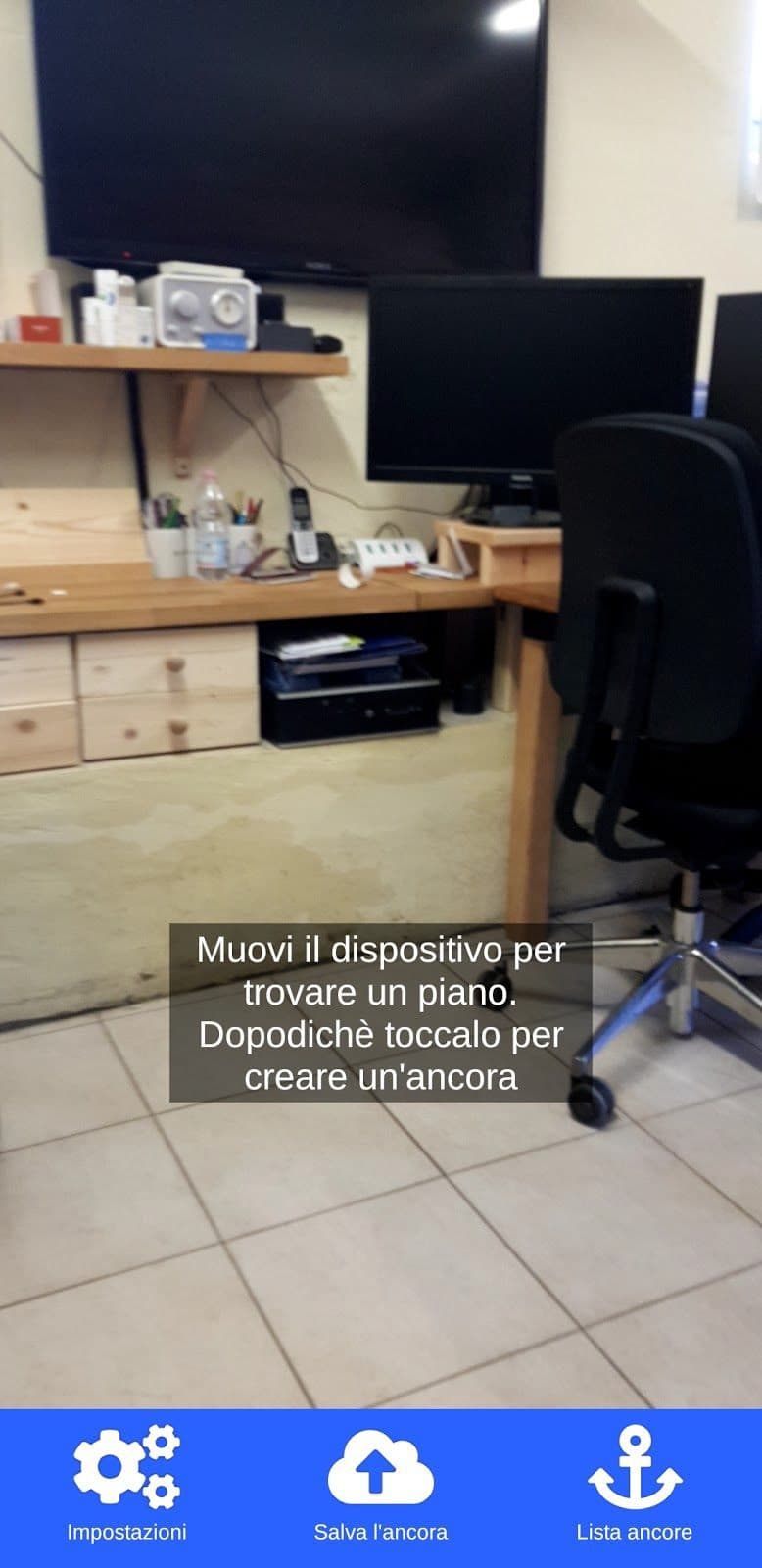
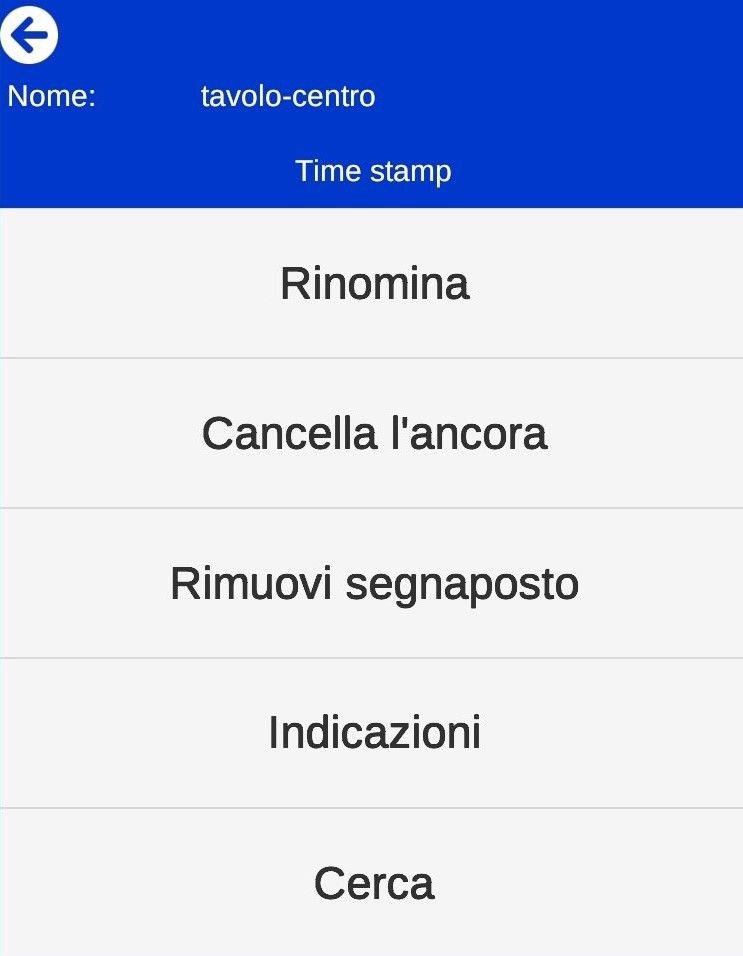
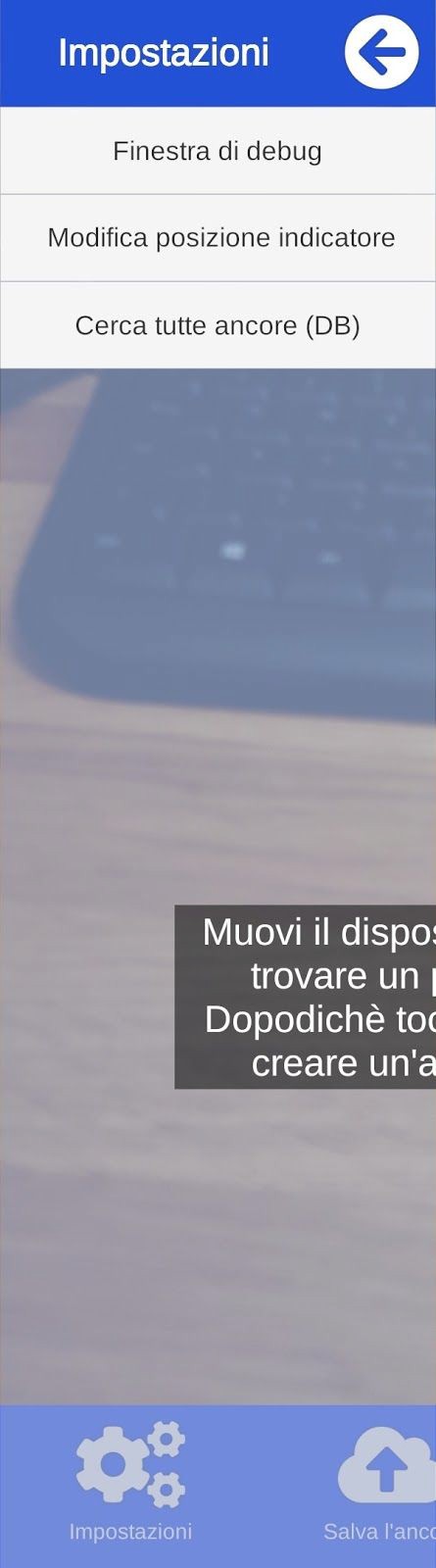
The result is a working prototype solution on Android: the app can create, save, rename, search and delete spatial anchors, give directions towards a chosen anchor — with a directional arrow in augmented reality — and share anchors between devices through the cloud database. The report also documents interfaces, known limitations, and the design and testing difficulties met with a technology that was then in beta.
From the lab
The images come from the project’s original documentation.